Showing posts with label AIDS. Show all posts

Thursday, May 29, 2014

5 Ignorant (and Sometimes Infuriating) Things People Say About HIV/AIDS

The Red Whistle is an awareness campaign for HIV.
Those who wish to learn more about the infection
should check them out.
I have to be honest. I wrote this because I saw some pretty nasty comments online about PLHIV and many of them are pretty darn ignorant. I really hate it when people blab about things they have no idea about or they haven't understood completely. I'm hoping that people are just ignorant, because if they aren't then they're just cruel. Faith in humanity, gone. 


Then again, it is the internet and we are on social media. People can say anything they want (mostly; please remember we have the Cybercrime Law now). But this doesn't mean that the ignorant and infuriating words can't be corrected and criticized, especially in my blog. This is Codswallop after all. 


So, people who blab without thinking, here's a fair warning: Anything you say can and may be used against you. 


As usual, if you dislike reading, this article isn't for you. I'm going to be putting in a LOT of references that nerds like me love to nibble on. Links galore! 


1. "Gays caused AIDS."

No. HIV causes AIDS. It is a virus that attacks the immune system, causing it to become inefficient in eliminating infectious diseases. The end stage of the HIV infection is the Acquired Immune Deficiency Syndrome or AIDS. Regardless of how fab gays are, I think it's beyond their awesome gayness to make a virus. Unless that awesome gayness is intertwined heavily with microbiology and genetics, of course.

In the 1980s a group of homosexual males were found to be suffering from Pneumocystis carinii, an infection which occurs on immune deficient individuals. This eventually led to the discovery of HIV. Then, it was called GRID or Gay-Related Immune Deficiency. 

For a comprehensive look at the history of HIV, check out this timeline.

We're not in the 1980s anymore, ladies and gentlemen, and it has been proven that HIV, unlike members of the Idiot Society, does not discriminate. Educational status, financial standing, and race do not shield one from HIV. It can affect men, women, children, the poor, the rich, the educated, the heterosexual, the homosexual, and the homosexual. In fact in some Malaysia, the "feminization of HIV" is becoming a trend, particularly among sex workers. This means that more and more women are becoming infected. 

Unfortunately, fundies are taking advantage of the high prevalence of HIV in gay men  and Men Having Sex with Men to further homophobic and even religious agendas. Claiming that "gays cause AIDS" is not only intellectually dishonest, it is also increasing the stigma and discrimination against the MSMs and homosexual men. In fact, these key population suffer double stigma - for their sexual preferences and practice, and their sero-positive status. 

Stigma related to the infection has detrimental effects in the treatment and eradication of disease. Sero-positive individuals and key population such as MSMs and homosexuals are often branded by the conservatives of society as sexually promiscuous and practicing sexual acts that are frowned upon. To save themselves from being "marked", most people would rather forego testing for HIV and even acquiring treatment and counselling for it. This is why our progress with combating the infection is slow.

The cause of AIDS is HIV, not people's sexual identity.

For more ignorant comments, check out the feedback in this article.

2. "AIDS doesn't matter."


Maybe I just have a weird sense of humor, but I find this joke lame at best, stupid and offensive at worst:


"Anung gusto mong magkaroon, HIV o AIDS?

Ako AIDS... 

Coz AIDS doesn't matter."


Translation for my English readers:


"What do you want to have, HIV or AIDS?

I'd rather have AIDS...

Coz AIDS doesn't matter."


What's worse is that I found it posted in a Facebook wall of a NURSE. God forbid our nurses have become so insensitive as to joke about HIV/AIDS. 


Does he mean that AIDS shouldn't matter because we should treat everyone equally and not discriminate? I hope so. And that hope was shattered. Unfortunately, many people joke about the infection, stating that it doesn't matter, and truly believe that it doesn't matter. Either they haven't seen the stats, they haven't heard the news, or they live under a rock.


DOH made it clear that the problem is far from a laughing matter.


Obviously those numbers are no joke. For more information, you can check out the HIV Registry in the DOH website. Sorry I couldn't link it here. As of this posting, the website is still down. 


3. "HIV is a punishment from God."


Seriously? Some people still believe this? No wonder the Philippines is still 3rd world. 


4. "The government should require key population to get tested."


I see the wisdom in mandatory HIV test. It will (1) ensure that more people are aware of their status and (2) allow identified PLHIVs to start treatment early. But mandatory testing should be last resort, primarily because it runs over several more logical solutions to the HIV problem and people's rights to autonomy in health care.


Point 1: It is against the law. 


Let us look at Section 15 of RA8504, also known as the Philippine AIDS Prevention and Contril of 1998.


"Sec. 15. Consent as a requisite for HIV testing. — No compulsory HIV testing shall be allowed. However, the State shall encourage voluntary testing for individuals with a high risk for contracting HIV: Provided, That written informed consent must first be obtained. Such consent shall be obtained from the person concerned if he/she is of legal age or from the parents or legal guardian in the case of a minor or a mentally incapacitated individual."
Argument 2: If the DOH would like to push for mandatory HIV testing, they would have to court several legislators to lobby it in Congress. This would take time and money. I am all for the amendment of the AIDS Law (it's 2014; a law made in 1988 definitely needs an upgrade) but focus should be in more aggressive actions to prevent the disease and not assaulting discriminated population to undergo a procedure against their will. Also, more sustainable solutions to providing ARVs to People Living with HIV (PLHIVs) should be considered in the amendment.
Read more of the AIDS Law here.
Point 3: In developmental work key population can mean high risk population. In the Philippines, this means homosexuals and MSMs and perhaps sex workerd, who are most commonly infected by HIV. These people are already stigmatized and discriminated. Mandatory testing will take away consent of patients when it comes to medical procedures. It undermines the principle of  client autonomy. It is against human rights.

Mandatory HIV testing may also lead to further discrimination against PLHIV. While it is stipulated in the AIDS Law that a sero-positive individual cannot be turned away from study or employment due to his or her status, being forced to go through the test may still discriminatory repercussions on KPs and increase the stigma against them. 

Point 4: There are better ways to get someone tested, and it is not making the test mandatory. Why not put money on massive education campaigns that would make people want to take the test and not fear it?

Recently, the DOH Secretary Enrique Ona made a statement regarding mandatory HIV testing. He was shot down by several advocacy groups and was reminded by the palace of the legalities of managing HIV. There are better ways to address the increasing number of HIV/AIDS. Education that includes key population AND people who have lower risk in getting the disease should be priority one. Not only will this help eliminate the myths and misconceptions about HIV, it will also help with the stigma surrounding the infection. reduction of stigma may allow people to be more open in terms of getting themselves tested. Another essential action is ensure sustainability in treatment and counselling for PLHIV.
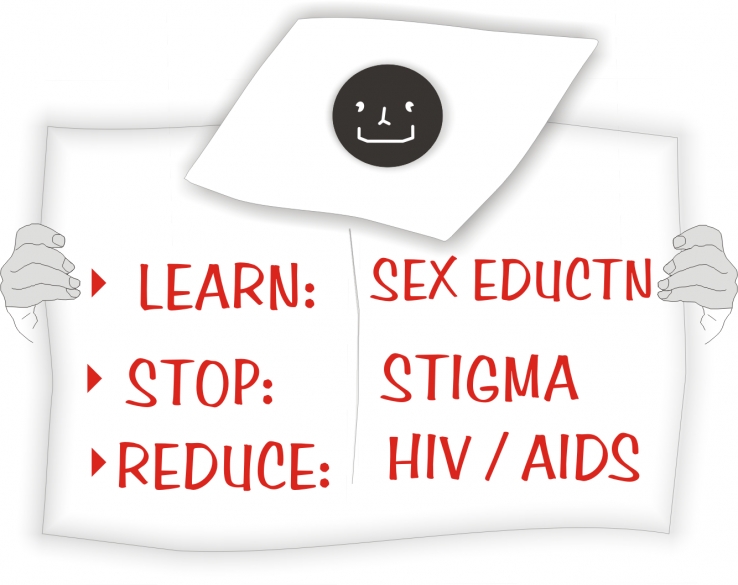

Picture is from the ever-awesome Internet

5. "May HIV ka? Yuck, don't touch me!"

An exaggeration, but not quite far from the truth. A lot of people who misunderstand the pathology of the infection believe that HIV is easily translated. Honestly, there is a higher probability that one will catch a common cold, for the simple reason that HIV is transmitted through blood and body fluids (semen, pre-cum, vaginal secretions, and breast milk). Unless there is a transfer of these fluids from the PLHIV to a sero-negative individual, say through unprotected sexual contact or broken skin, HIV will not be transferred so easily. 

From HIVandHepatitis.com


Learn more about the HIV transmission here.

People who are ignorant about the communicability of HIV and and who stigmatize PLHIV based from how most people are infected (unprotected sex) believe that even casual contact with PLHIV would cause them to acquire the infection. This is far from true and why this writer used the word "ignorant". You can hug a PLHIV, kiss a PLHIV, even have safe, satisfying sex with a PLHIV partner and still be HIV-free.


I'm really bad at concluding my posts, but really there's just one lesson to be learned here: HIV is a disease that, although not 100% understood (we have yet to find a cure), can be studied in many books and materials. All you have to do is go on Google and read with open eyes and an open mind. Read and understand something before opening your mouth. If you don't care about hurting people's hearts with your insensitivity and people's brain with your ignorance, at least care about your reputation. Wouldn't want to be branded as stupid, would you?


Related Article:


Wednesday, February 19, 2014

But I'm Your Best Friend! HIV/AIDS Talk and the UPLB Experience


This guy is Kris Gerard Alvarez, a certified zombie lover, and a microbiology instructor with a huge poster of the metabolic cycle in his living room. He works at the University of the Philippines, Los Baños. This blog post and whatever it contains are his fault. Oh, and he is also happens to be my best friend since first year high school. God, I'm old.


Kris and I (ye photographer) at North Park, Alabang Town Center. He ate everything.
Krissy and I talk about everything, from our love lives to our passion for science and the art, to social issues, although it was only recently that my insane best friend invoked the "Serve the People" side of being an Isko. It was October last year when, during our once-in-a-blue-moon date, in the middle of eating at North Park, that the subject ofthe Facebook page called the "LB Files" came up. Apparently this FB page contains sordid, if not brave, confessions of students from UP Los Banos. I also shared with him the stuff I learned from the online course I took on HIV/AIDS. The conversation was the start of a small project that mixed both of our passion - his science and my advocacy.

This was the start of a little project we came up with - to give a less sterile and more societal (and sassy) overview of HIV/AIDS to UPLB students. With a bit of coordination with Ms. Gem Encarnacion, one of the microbiology professors in UPLB, our project was good to go. 
Ms Gem and I, after the HIV/AIDS talk. She's so incredibly accommodating!


My talk was to be on the 5th of February, a Wednesday. I had two schedules: 9AM and 5:30PM. This meant I had to be at Los Baños at 8AM. I spent the night in Alabang so I can be at South Station at the ungodly hour of 6AM. 


A Far Cry from a High School Memory 

Me, being eloquent and articulate: OMG trees O.O
When I was in high school, UPLB was one of our more common haunts. This is because of a project we were working on for our Research subjects. As 4th year students, we quantified a substance called butyrate, a byproduct of resistant starch inoculated by human feces in the large intestine. Butyrate is a substance found to cause apoptosis (cell suicide). We quantified how much butyrate we could get from variations of bananas. 

It was probably because I was a screwed up high school student that I remembered UPLB very differently - less enchanting and gloomier. Long story short, I think UPLB is much better than Diliman. Maybe it was the fact that the campus was away from the hustle and bustle of the city, or that it seemed so alive because of people walking about. Maybe I just enjoyed the trees and the wide open spaces UPLB offered. At night, the campus was still dark. Kris and I walked back to his apartment where I spent the night. The lamp posts cast a yellowish light on the otherwise pitch-black streets. Above us, the night sky gleamed and twinkled in all its glory. 

I'd love to go visit again, just to walk around, coffee in one hand, with people who I can talk about anything and everything with. That's definitely in my itinerary this year. 


Let's Talk About It


My little poster right outside Krissy's office.


HIV/AIDS has always been a topic that a lot of people shy away from, and being unable to talk about it is the root of ignorance. My talk was directed to microbiology students but Kris and I decided that an overview of the HIV/AIDS situation in the Philippines is in order - to connect the clinical with the societal, to ensure that these young people know that HIV/AIDS is a very real problem that can affect anybody. The message is simple: you can be part of the statistics. 


HIV does not discriminate (it's people who do that)

It is noteworthy to check out the stats the Department of Health provides. Majority of the new cases of HIV infection are men who engage in sexual intercourse with other men. Despite this, the message must be clear: you can be part of the statistics because anyone can have HIV - the poor or the rich; the educated or the ignorant; the young or the old; the ones engaged in heterosexual or homosexual intercourse; man, woman, or child. The virus invades a part of the immune system called CD4 T-cell, where it replicates. The replication eventually destroys the cell, causing the person living with HIV (PLHIV)'s natural defense against infections to weaken. 

HIV is found in several body fluids - blood, pre-cum, cum, vaginal and anal mucus. It is understandable why 95% of the cases contacted the disease through sexual intercourse. The virus may be present in other body fluids like, saliva and urine, but in such small amounts that it cannot transfer the virus. The fundies are right that abstinence - in all shape and forms - can save us from (a) hell (of an infection). After all, 95% of the stats would not have happened if there were no sex. Unfortunately, abstinence is a pretty tough promise to keep. If you can't abstain, then at least have some of these babies:


Those aren't candies, but they are flavored. 
Condoms not only prevent unwanted pregnancies, they also lessen the risk of contacting HIV. 

"I would think about killing myself."

This was, unfortunately, one of the responses of some of the participants when I asked them what they would do if they find they have HIV. Many people believe that being sero-positive means the end of the world. This depressive ideology is primarily rooted in ignorance. 

We have yet to find the ultimate cure for HIV. There is also no vaccine to prevent us from being infected. There are, however, these marvelous things called anti-retroviral drugs. ARVs function to limit the viral load of HIV. Lower the viral load and you lower the transmission rate and lengthen a PLHIV's life. 


Bad news: ARVs cost an arm and a leg. 

Thank goodness for the money we've been granted by Global Fund which allows the government to provide free ARVs to PLHIVs. Even the test to determine your status is free! The problem with this is sustainability. As of now, the AIDS Law does not contain a provision to allocate money to providing PLHIVs with free treatment. We're absolutely reliant on the grant. Amendments, please.

Thank Science for ARVs. Because of these medications, PLHIVs have a chance to live relatively normal, fruitful lives. 

Getting HIV is not the end of the world. You don't die the next day after finding out you have the disease. With proper treatment, you can live your life well, have satisfying and loving relationships, have a family, and contribute to society.

So why all the negative vibes?

Stigma and a Deadly Cycle


Photo courtesy of The Stigma Project

Culture has some very real and very nasty contribution to why we now have more than 10,000 PLHIVs in the Philippines. Sex has always been viewed as a taboo in the country. Pre-marital sex is frowned upon and those who engage in it are called many different names. Slut-shaming is so rampant in the Philippines, it is but second nature to many Filipinos to drag up one's sexual history whenever they are facing controversies and hurl it at their faces. Homosexual sex is not merely frowned upon, but is actually persecuted. You only have to go to the comments section of news stories featuring same-sex marriage to see people throwing Bible verses about Sodom and Gomorrah and how homosexuals are destined for hell. Slut-shaming, bigotry, and homophobia in the Philippines are not as bad as in more Sotto conservative countries, but they're not exactly mild either. 

It does not help that sexual intercourse is the most common mode of transmission for HIV. The slut-shaming, bigotry, and homophobia extends to the disease. Fear of being associated to the disease has caused people to shy away from seeking accurate information from health care professionals. In other words, the stigma attached to the disease has helped propagate ignorance about the disease. 


Ignorance means that people sometimes have no idea how to protect themselves from HIV. Ignorance also means people may ostracize PLHIV just because they are afraid of getting the disease. It is this fear, this stigma, that affects PLHIVs and their significant others the most. It is also this stigma that allows the spread of disease.

If you are afraid of slut-shaming, bigotry, and homophobia, sometimes from who you believe are your friends and family, the people who should care and love you, would you be brave enough to know your status, to seek treatment, and to live life?

Some are not. Some would rather hide their status and not seek treatment. Some would rather not know their status at all. In the immortal words of one of my teachers in the Emory University AIDS course, people would then be "having sex in a sea of virologic ignorance". The disease could be passed along, without the carrier being aware of it.

Stigma, aids HIV to propagate in a society. In this case, that society is the Philippines. The only way to eradicate the stigma (and thus help the worsening situation in the country) is to eradicate ignorance. The more you know about HIV/AIDS, the more you can protect yourself and your loved ones from it.

Explore. Express. Empower.

Anyone can be part of the movement to halt HIV/AIDS on its track. There are developmental workers who put up programs for HIV awareness and prevention, and who help people deal with the infection. There are health care workers who specialize in the disease. There are various individuals who do their part to halt the spread of the virus. And you can be part of this movement. 

Explore the disease and everything it is connected with. Know as much as you can about it. Talk to about HIV and how it affects a person, how it affects society. Talk about the interplay of health, society, gender issues, and HIV/AIDS. The more you know, the more protected you and your loved ones can be.

Express. Spread what you know (and not the virus). Talk about what you found out - to your family, your friends, the people in your social media. 

Empower. Join groups that lobby for the AIDS Law amendment. Be part of a social media campaign for awareness. Form or join organizations geared towards providing both information and service to prevent HIV and help PLHIVs live their lives to the fullest. All of these are at things that you can do. Sabi nga namin sa adbokasiya, "Puso lang ang puhunan". It all starts with breaking the apathy and with the determination to contribute for people's betterment.


My UPLB experience is truly a highlight of my February. I do hope I have more opportunities to share my passion and the things I fight for.

Thank you, again, to Ms. Gem who helped us organize this little project. And Krissy, my best friend for ever until my telomeres run out, there was the fruit of our random conversations. I demand we talk more. It seems to lead to something wonderful and, although probably by a long shot, life changing.

Wednesday, May 22, 2013

In a Nutshell: What I Learned in the AIDS Course

A/N: Below is my final essay for my online AIDS Course at Coursera. I completed the said course with distinction (hurrah!), with a final grade that I find to be acceptable. What is most important for me, though, are the things I've learned about HIV/AIDS. The final essay was to be a collection of 5 statements about HIV/AIDS that I found to be significant. Here they are. 


The weeks I spent on the AIDS Course at Coursera has strengthened my resolve as a health care practitioner and an advocate for reproductive health. Throughout the course, I have tried to create parallelisms between the international context of the disease, and the local situation in the Philippines, which still has an escalating number of HIV infection[i]. Thus some statements that I have chosen are in line with the Philippine context.


I have chosen five statements that summarize the most important things I have learned in relation to its significance to my work.


1.    “We live in a society that chooses not to talk about sex, let alone educate the kids (about) what engaging in sex entails, good and bad…I believe that young people are fully aware that HIV exists. I also believe they know nothing about it at all.” – Angelo Esperanzate, AIDS Society of the Philippines[ii]
This sums up the status of the Philippine society’s outlook on HIV/AIDS, exposing the vulnerability of the generally sexually-active but sexuality-ignorant youth.  This statement is important to me because of my belief that resolving issues on reproductive health, which includes HIV/AIDS, are a play of biological and societal factors. The biological factors that make HIV/AIDS such a devastating disease are continuously being addressed – the pathogenesis is being explored, vaccines are in development, biomedical preventions are being studied, utilized, and improved. However, I believe that HIV/AIDS will never be eradicated if primary levels of protection are not strongly instituted: preventing people from ever contacting AIDS through lessening risk-taking behaviors, especially unsafe sexual intercourse. This can be done through proper counseling and education, which will be very difficult, if not impossible, in a culture where the norm of keeping mum about all things sexual. The twisted culture of conservatism is rendering people ignorant about protecting themselves from the disease.

2.    “Because it inserts its genetic material into the chromosome, HIV cannot be eradicated without killing every infected cell.” - Eric Hunter, MD, Professor of Microbiology & Immunology, Co-Director, Emory CFAR[iii]
Image from aids.gov

I am one who appreciates the fantastically terrible processes of how diseases wreck havoc in the body, which is why this is striking to me.  As explained by Dr. Hunter in his lecture, HIV primarily targets CD4 T-helper cells (which Dr. Hagen calls “generals” and “conductors” of the immune system[iv]), thus rendering the immune system incapable of efficiently addressing other threats to healthii. This statement is a summary of how HIV/AIDS is a double-edge sword – allowing the disease to escalate means CD4 cells will die, but to achieve functional cure for HIV (or suppress viral load), infected CD4 cells would still have to be eradicated.
This statement is significant to me because it is a challenge to those who wish to eliminate the epidemic: HIV is a terribly intelligent disease – your move, science.
And the answer is “bring it on”.


3.    “HPTN 052 is a game changer.” – Michael Sidibe, Executive director, UNAIDS.[v]
Dr. del Rio’s lecture about Treatment as Prevention (TasP) presented the HPTN 052 study, which unearthed wonderful results in terms of biomedical HIV prevention: total relative reduction of HIV transmission through TasP is 96%.iV The result yielded is incredible. This statement is significant because it reinforces one of the most important thing that I have learned in the AIDS course – that a Person Living with HIV (PLHIV) need not be feared, that with proper treatment, these people can line relatively normal lives and the chances of passing the disease to others is greatly diminished.  
It is a statement that, in my opinion, brings hope to PLHIV and those who advocate with and for them.

For those interested to read up on the study, look it up here.


4. “The Body of Christ has AIDS.” – Denise Ackerman, woman theologian.[vi] 
Ackerman’s statement is a bold, wonderful dare to the conservative views of some religions factions in dealing with HIV/AIDS and the discriminatory tone some religious groups took in the earlier stage of the epidemic. It is also an epitome of how religion can be a driving force for eradicating HIV/AIDS. In Dr. Blevins’s lecture, he mentioned that religion can either promote an environment for the spread of HIV or for stopping the infection in its tracks.vi This is one of the most significant statements for me because it is generally applicable to my country.

The Philippines the only Catholic nation in Southeast Asia, and the new cases of HIV infection are rising. Despite the clause for the separation of Church and State[vii], the Roman Catholic Church still has indirect power in terms of policy-making and has exercised this power to prevent the Legislative from passing bills that would provide comprehensive reproductive and sexual health education and services (although after years of battle the Reproductive Health Law was passed last year). Religion stands against informing the public regarding safer sex practices beyond abstinence. This is one of the reasons seen by reproductive health advocates for the increasing HIV infections.
This statement is the banner of any activist-advocate wishing to turn the tides and utilize religion to fight against the HIV epidemic.

5.    “Live HIV Neutral”. – The Stigma Project[viii]
Image from The Stigma Project


The final statement is from the Facebook page of The Stigma Project, and it reminds me of something I’ve heard a long time ago: that we are all living with HIV, regardless of our sero-status. HIV is a societal disease as much as it is a biological one. This short-but-powerful statement is important because of its double meaning: that PLHIV can live as normal as possible (thus “neutral”) and for those with sero-negative status to let go of discrimination and see HIV/AIDS from an objective and scientific position, instead of a condemning one (again, being “neutral”)


To conclude, AIDS is a muti-faceted disease which affects the society as much as it affects society. Information is vital to combating this epidemic and one must look at the information presented with objective eyes an open mind and an understanding heart.


[iii] Hunter-HIV Pathogenesis video lecture
[iv] Hagen-Immunilogy 101 video lecture
[v] Del Rio – Part 1: TasP video lecture
[vi] Blevins – Part 3: Social History of Religion’s Influence video lecture

Thursday, March 28, 2013

AIDS, Wits, and Thailand’s Condom King


Above is a short film called "A Reason to Smile" from Scenarios from Africa

A script-writing contest. A short film directed by Africa’s best. A breath of fresh air as to how HIV-positive individuals are stereotyped. These are the things that amazed me about Scenarios in Africa’s work. Discussed by Dr. Kate Winskell, this section was Week 3’s highlight for me. The creativity by which Scenarios addressed the HIV and AIDS through education inspired me to look through the other creative ways that the disease is being dealt with. It is fortunate that, in my years of advocating for reproductive and sexual health in my country, I have had the pleasure of meeting Thailand’s Condom King, Mechai Viravaidya. I am not Thai – I am Filipino – but I admire Khun Mechai’s humor and his no-nonsense, out of the box approach to bringing down HIV and AIDS.

In the late 1980s, the number of HIV positive individuals soared to spic proportions in Thailand. In fact, in 1991, there were roughly 140,000 cases per year in the country.[i] Over a twelve-year period, however, these numbers plunged by an amazing 90%. World Bank estimated 7.7 million lives saved from the infection.[ii]

How was this done?

Like Scenarios, Thailand also tapped public awareness and education as its primary means of slowing the spread of HIV. The awareness campaign was headed by Mechai Viravaidya, who zeroed in on the problem: spreading the word about HIV and AIDS and providing basic services that would ensure protection against the disease in the fastest possible manner. To address this, Khun Mechai and his group tapped media and laymen. A compulsory 30-second infomercial was aired in television for every hour of broadcast and several TV and movie personalities were made advocates of HIV prevention. Information on the infection and its transmission can be found on calendars and other easily-seen materials. The military and the politicians were educated on the HIV and AIDS. Condoms were made available everywhere: in buses, shops, in taxis, in bars. HIV and AIDS education was launched in businesses and establishments, and it did not stop there. Schools would have AIDS Awareness Day, an event funded by businesses. Condom-blowing contests were a regular activity. University students were taught about the infection. They, in turn, helped secondary students learn about the disease. These secondary students passed the knowledge to primary school student. These kids would then go home and educate their parents and siblings about HIV and AIDS, often bringing with them complimentary condoms just in case one was needed. Khun Mechai himself penetrated Thailand’s red light district, often accompanied by someone wearing a multi-colored condom dress, to give out rubber to commercial sex workers as well as their patrons.
Photo by Yuri Baral. At Mulat Pinoy's Beyond Condoms talk with Mechai Viravaidya and
other RH advocates of the youth.


Condoms or, as Khun Mechai calls them, weapons of mass protection, became part of everyday life and were no longer sexualized.  Many conservative societies demonize the use of the rubber to protect against disease, saying that promotion of such is also promotion of sexual promiscuity. This is one of the reasons why, as Dr. James Curran said, “people are having sex in a sea of virologic ignorance.” Khun Mechai went against these beliefs and made condoms an everyday object. Those who campaigned with him for safe sex wore dresses made of condoms. The rubber was used keep cellphones and other gadgets waterproof. He once demonstrated how it can be used to tie one’s hair back. These actions shook whatever shame the Thais have in acquiring the protective device.iii, iv

Mechai Viravaidya found a highly effective formula in stopping HIV on its tracks: tapping the grassroot level to educate one another, and making condom not just accessible, but also acceptable[iii] [iv]

“When money talks, people listen”

This is something that Khun Mechai said, when I met him in 2011, during a talk held in.[v] The belief in the power of business in uplifting people from poverty and from a degraded self esteem – things that People Living with HIV (PLHIV) often go through. This was what sparked the Positive Partnership Program.
In this program, a PLHIV partners with an HIV negative and they are given a loan to start a business. Not only does the business provide the PLHIV a source of income for medical needs such as anti-retroviral drugs, but it also allows the person to be re-integrated to society. Most PLHIV feel alienated due to their positive status. Positive Partnership empowers PLHIV by making them entrepreneurs – functioning members of society. The project was so successful that within 3 years from implementation, 91% of the loan had been paid off. iv,[vi]

The Positive Partnership Program hits two birds with one stone: PLHIV become financially independent and assert themselves as contributors to their community.

Radical approach

These methods were as aggressive as they are radical – and they worked. It did not take a miracle, but it did require that people change their behaviors and outlook about safe sex, conservative society or otherwise.
As of today, I have yet to see such revolutionary approach to dealing with HIV and AIDS in the Philippines, my country, where AIDS cases are growing steadily. I hope one day we would. This innovative method, just like Scenarios of Africa, which is aimed at behavioral change through creative information dissemination, should be taken into consideration by those who wish to bring down HIV and AIDS.


Tuesday, March 12, 2013

Debunking Duesberg Hypothesis


A/N: Below is my first essay for the online course on AIDS that I am taking. It is my attempt to squeeze in the everything in my head in only 600 words. I am sharing this with you because, although not the best, I am proud of it. This one is dedicated to the friends who inspire me to pursue bigger and better things. Don't worry. I promise to do better on my next essay.

Photo from worlddomination.com


Among the many AIDS denialist theories, molecular biology professor Peter Duesberg’s is possibly the most popular, if not the most controversial. In 1998 study, Duesberg zeroed in on drug use and anti-retroviral drug therapy as the catalysts of AIDS. He showed that majority of those with AIDS in the United States and Europe were recreational drug users. Another similarity was the use anti-retroviral drugs (ARVs).[i] Of course, other men and women of science did not take these propositions sitting down. On Duesberg’s website is a quote from a great scientist, Albert Einstein: “The important thing is to never stop questioning.” Those who were unconvinced by the Duesberg Hypothesis did just that.

In his study, Duesberg pointed out that in the early 1980s, those who were diagnosed with AIDS were also mostly homosexual men with multiple sex partners, and who used recreational drugs as aphrodisiac or psychoactive stimulants, some of which introduced to the body intravenously. This was one of the reasons why he pointed to drugs as a cause of AIDS.i Closely associated with the onset of AIDS is the decline in the CD4 cells, which are damaged when the virus replicates. This drop is an important basis in diagnosing if a person has developed AIDS. The study Does Drug Cause AIDS?, published in Nature in 1993, showed that the CD4 count of those who were seronegative or HIV-negative individuals regardless of drug use had relatively stable CD4 count. Furthermore, this entire group’s CD4 level stayed well above the normal value (600-1,200 cells per cubic millimiter[ii]) from 1986 to 1990. In contrast, regardless of drug use, CD4 cell count of those who were seropositive (positive for HIV) declined significantly. It is interesting to note that the 
discrepancies in the CD4 decline of those subgroups with varying drug use were only very slight.[iii] As the seronegative drug users do not experience a collapse in their immune system, these statistics strongly suggest that drug use does not affect the progression of the infection. This conclusion was further strengthened by a study entitled Recreational Drug Use and T Lymphocyte Subpopulations in HIV-uninfected and HIV-infected Men, published in 2008, which looked at the correlation of CD4 and CD8 count with drug use in men who have sex with men (MSM). Here researchers “found no clinically meaningful associations between use of marijuana, cocaine, poppers, or amphetamines and CD4 and CD8 T cell counts, percentages, or rates of change in either HIV-uninfected or -infected men.”[iv]  These studies are very strong evidence against the Duesberg Hypothesis.

Another controversial clause in the denialist’s claims is that anti-retroviral drugs are the actual cause of AIDS. Antiretroviral drugs act to inhibit viral replication, preventing the increase in concentration of HIV in the system. It was observed in a study conducted by Division of Infectious Diseases and Hospital Epidemiology, University of Zurich, in 1999 that 6.6% out of 2,675 HIV patients on highly active antiretroviral therapy (HAART) achieved and maintained undetectable viral loads. Viral load is, of course, correlated with the progression of disease.  Several studies also correlated ARV use to significantly slowing down the progression of the disease. In the clinical trial called BW002, Azidothymidine  efficacy was compared with placebo in 282 patients with  AIDS or late signs of HIV infection. In the trial, only one of the 145 patients treated with the drug died whereas 19 out of 137 patients treated with placebo died within six months.[v]

Properly questioned and dissected, it seems that the Duesberg hypothesis cannot to stand the test of science.